Wednesday, September 21, 2011

TONY BENNETT


Tony Bennett tells it like he sees it. That makes a lot of people mad. Recently, the celebrated singer told a story on the Howard Stern Show (to be clear: Howard Stern is a knucklehead) about meeting George W. Bush at an awards ceremony. Bennett says Bush admitted to him that the Iraq War was a mistake. “He told me personally that night, he says, ‘I think I made a mistake."

Now, understandably, Bennett is under fire. Conservatives are in an uproar. Not surprisingly, a spokesman for Bush denies the claim. Many are accusing Bennett of being unpatriotic.

Bennett, who fought in Germany during World War II but considers himself a pacifist, believes America’s foreign policy led directly to the attacks on 9/11.

“But who are the terrorists?" Bennett asks. "Are we the terrorists or are they the terrorists? Two wrongs don’t make a right." After Stern questions him, Bennett says, “They flew the plane in, but we caused it. Because we were bombing them and they told us to stop.”

In response to the uproar following his remarks, Bennett issued this statement on Facebook:

“I am so grateful to be an American and as a World War II veteran. I was proud to fight to protect our values, which have made America the greatest country on the planet. There is simply no excuse for terrorism and the murder of the nearly 3,000 innocent victims of the 9/11 attacks on our country. My life experiences — ranging from the Battle of the Bulge to marching with Martin Luther King — made me a life-long humanist and pacifist, and reinforced my belief that violence begets violence and that war is the lowest form of human behavior. I am sorry if my statements suggested anything other than an expression of my love for my country, my hope for humanity and my desire for peace throughout the world.”


Tony Bennett's new album, Duets II, features a song with the late Amy Winehouse. Bennett spoke to The Daily Mail about his drug use early in his career. "Back then everybody was rampant with drugs, everyone was doing it … I was the Amy Winehouse of my day," Bennett said.

Whatever you may think of his views, you've got to admire his honesty.


Music video by Tony Bennett & Amy Winehouse performing Body And Soul. (C) 2011 Sony Music Entertainment

Monday, September 19, 2011

ALL WE ARE SAYING


A behind the scenes look at the making of "All We Are Saying," a tribute to John Lennon by guitar virtuoso Bill Frisell. From Beatles to his solo work, John's music is rendered instrumentally by two guitars, violin, bass and drums. I was lucky enough to hear a sneak preview of the album and was amazed by these interpretations.

The album will be released September 27th on Savoy Jazz.

Friday, September 16, 2011

1970S IN NEW YORK CITY


Maybe these guys are trying a little TOO hard, but you have to admit the prices are good. Next time you're visiting New York City--in a Time Machine--be sure to check out the Hotel Seville in the 1970s.


Remember the Seventies in New York? In case you don't, the city was flat broke and gritty and dirty, and Times Square was still a seedy playground of porn and drugs and prostitution. Truth be told, some would prefer that dark, dangerous world to the bright, plastic, Disneyland left after the Giuliani clean-up. To get the feel of the gritty old days, watch a good seventies New York film like Serpico, Dog Day Afternoon or Across 110th Street. Or watch this commercial, where the hotel staff is begging for money.

The Seventies were tough. These days we're used to federal bail-outs, but back then when New York asked the federal government for relief it got a big goose egg. Nada, niente, bupkis. Remember this headline?

Just for old time's sake, here's the opening sequence of Across 110th Street from 1972.

Wednesday, September 14, 2011

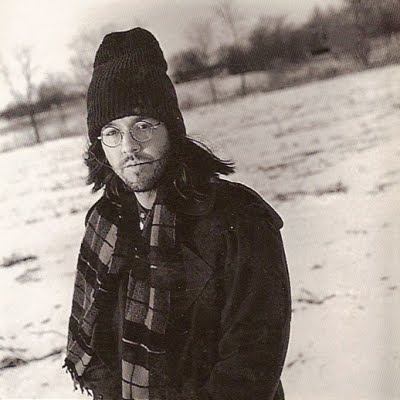
DFW, FRANZEN & LEYNER


A roundtable discussion with three (post-(post-))modern novelists, Jonathan Franzen, David Foster Wallace and Mark Leyner, begins around the thirty-six minute mark.

In a stunning example of "blame the dead guy," the New York Times Magazine ran a riff ("Another Sort of Thing to Pin on David Foster Wallace," Aug. 19, 2011) that admitted that "[DFW] was inarguably one of the most interesting thinkers and distinctive stylists of the generation raised on Jacques Derrida, Strunk and White and Scooby-Doo, and his nonfiction writings, on subjects as diverse as cruises, porn, tennis and eating lobster, are a compelling, often dizzying mix of arguments and asides, of reportage and personal anecdotes, of high diction ('pleonasm'), childlike speech ('plus, worse'), slacker lingo ('totally hosed') and legalese ('what this article hereby terms a ‘Democratic Spirit’ '), often within the course of a single paragraph."

The essay goes on to blame DFW for all that is slack in the world of post-post-modern writers of novels and blogs (imagine! that!). "Wallace isn’t responsible for his imitators, much less for the stylized mess that is Gen-X-and-Y Internet syntax." His followers (Eggers, et al) "borrowed not only Wallace’s tics but also his championing of post-ironic sincerity and his attempts to ward off criticism by embedding all possible criticisms within the writing itself."

That's a post-modern trick, a device, a rhetorical tactic: anticipating the opposing argument and deflating it ahead of time.

"The ur-text of this movement, though, is Wallace’s essay 'E Unibis Pluram: Television and U.S. Fiction,' written in 1993. It’s a call for writing that transcends irony and detachment but, itself, comes drenched in both. The essay bemoans what Wallace saw as the near-impossibility of writing inventive, self-aware fiction in a television culture. He concludes by imagining some future group of 'literary ‘rebels’ ' who would be 'willing to risk the yawn, the rolled eyes, the cool smile, the nudged ribs . . . [and] accusations of sentimentality, melodrama.'"

But hey. That's kind of, er, interesting, um, and I mean that.

Perhaps the most interesting post-suicide DFW essay appeared the the New Yorker ("The Unfinished," March 9, 2009). In the piece, D. T. Max commented on that meta-style most evident in "Infinite Jest," remarking that "such techniques originally had been his way of reclaiming language from banality, while at the same time representing all the caveats, micro-thoughts, meta-moments, and other flickers of his hyperactive mind. Wallace’s approach reminded the reader that what he was reading was invented."

The style may have spawned a million imitators, but after Jest, DFW wanted to move on. Jonathan Franzen, fellow writer and friend, is quoted in the New Yorker piece. “There was a certain kind of effulgent writing that he just wasn’t interested in doing anymore.” In the next novel, the unfinished work published as "The Pale King," a character comments, “Maybe dullness is associated with psychic pain, because something that’s dull or opaque fails to provide enough stimulation to distract people from some other, deeper type of pain that is always there, if only in an ambient low-level way, and which most of us spend nearly all our time and energy trying to distract ourselves from.”


Wallace was trying to write differently, to change his style and, in effect, abandon his imitators, while wrestling with mental illness and a reliance on Nardil, an antidepressant he'd been taking for two decades. He left his life, as well as his next big work, unfinished.

Wallace may have become famous for his freewheeling, self-referential, footnote-laden, post-ironic, slacker-infused extravaganzas, but toward the end he was after a more straightforward, less experimental prose. He wanted to write passionately moral fiction that showed readers how to live a fulfilled, meaningful life. That was a tall order, and he may have fallen short of the mark in his eyes. Couldn't he just write cool stories, that wild, finger-popping, clever work his fans and imitators gobbled like Mint Milanos? Couldn't he play more textual games, meta-fictions, post-ironic ironies with a wink and a nudge and a built-in critique? No, he wasn't playing those games anymore. As he said, “Fiction’s about what it is to be a fucking human being."

Saturday, September 10, 2011

SHAKESPEARE IMPRESSIONS


Jim Meskimen performs Clarence's speech from William Shakespeare's Richard III as a number of different celebrities. In case you're not up on your Shakespeare, this is a history play from the First Folio, written about 1591. It depicts the Machiavellian rise and brief reign of Richard III of England.

In this scene, Richard has just ordered two murderers to kill his brother Clarence in the tower. Clarence, unaware, relates a strange dream to his keeper. He describes falling from an imaginary ship and seeing skeletons of thousands of men "that fishes gnawed upon," and "wedges of gold, great anchors, heaps of pearl, inestimable stones, unvalued jewels" all "scatterd in the bottom of the sea."

As we all know, listening to someone describing a dream can be dead dull, but Clarence has the good fortune of speaking the rich, colorful words of the greatest writer in the English language and the world's preeminent dramatist, William Shakespeare. Along with his other accomplishments, Shakespeare provided Jim Meskimen with a showcase for his spot-on impressions, and Meskimen, in turn, perhaps unintentionally, shows us how many different ways Clarence's speech could be interpreted by a player, albeit always trippingly on the tongue.

Thursday, September 8, 2011

IN CASE YOU MISSED THE REPUBLICAN DEBATE


I think what Matt Taibbi said about the last Republican debate still applies:

"Every single candidate last night was saying one version or another of the same thing: that the private sector rocks, the government sucks, we need to drill everywhere, reduce taxes and end regulation. The only area where they differed was in their choice of antigovernment metaphors. In that regard Cain’s 'Obama’s putting all the money in the caboose' and Bachmann’s 'three legged stool of Republicanism' made me pretty excited for the later stages of the campaign, when the imagery inevitably will get more and more tortured as the desperation to find new ways to say the same old thing gets more pronounced."

And this is good:

"The last time I saw Mitt Romney up close, four years ago, he looked like one of the Nexus Six replicants from Blade Runner, and he always seemed quick, interested, and alert in debates. But he seemed mentally and physically fatigued last night. He and Ron Paul have both aged visibly since the last campaign (a reader emailed me during the debate: 'Separated at Birth: Ron Paul… and Grandpa from Texas Chainsaw Massacre?') and the former Massachusetts governor’s trademark eager-beaver act was missing. I wonder if this is intentional – maybe his strategy is to play the four-corners offense right from the start, let the wing-nuts run each other ragged in the early part of the campaign, and then trump the field in the end with a McCain-style above-the-fray, at-least-I’m-not-completely-crazy, wizened veteran pose. Romney to me is the biggest threat to Obama. People right now are focusing on all the negatives he brings to a Republican primary race, on his non-Christianism and his history of unpopular (to Tea Partiers) positions on choice and health care, but if he gets to the general election those same qualities will be positives to independent voters, and it’s not like there aren’t fiscally conservative independents looking for an excuse to dump the president."

Tuesday, September 6, 2011

WRITERS AND THEIR DAY JOBS


Writing just doesn't make sense. Economically, anyway. The work is exceedingly difficult, and there is no guaranteed success. In fact, there is not even a guaranteed job at the end of a writer's training--unlike medical school, say, where one can generally find a practice somewhere, even if one has to move to a less desirable zip code; or dental school, where most graduates will eventually find an open mouth; or law school, where the bar must be passed, of course, but after that highly billable hours will be available to pay back exorbitant school loans. The average person is willing to pay for these services, or, more accurately, must pay for these services in our litigious and increasingly sickly society. On the other hand, the average person doesn't read. Not much, anyway. Road signs and cereal boxes. The occasional sports page. Along with financial security, these other professions are rewarded with a certain prestige bordering on awe, and society is more than satisfied to meet them with great respect, even pushing their daughters forward (or sons, for that matter) hoping to kindle romance, whereas writers are looked upon as creative oddballs at best, or, at worst, the giant insect Gregor Samsa metamorphosed into, and certainly not the type of individual to whom respectable citizens would entrust their daughters (writers will find their daughters, anyway, truth be told). Invoking Kafka isn't inappropriate; who best to tell the tale than a harried day clerk who wrote by night? A writer works day jobs, and there is no guarantee a book will ever be published, and even less chance for a work of literary fiction (as opposed to a diet book, a cat book, or a cheesy romance). No wonder logical people look askance, parents fret, bankers grumble, and armchair psychiatrists question their sanity. But the writers will have their day. As the burghers gather on the golf course, thumbs hooked in their vestpockets, they have no idea the man pouring their drinks in the Golf Club will one day eviscerate them in print, traducing their unimaginative lives with wit, drawing laughs with their Babbitry (Babbit: noun; A narrow-minded, self-satisfied person with an unthinking attachment to middle-class values and materialism). For now, the writer pours their weak beers and submits to their puerile humor and too loud laughter, but he is listening --listening with a keen, sensitive ear--to their offhand remarks, their self-satisfied mutterings, their puffed-up opinions on sports and cigars and women and automobiles--because he is also a trained professional, and this is his practice, and while he may be working on a long shot he's right on schedule. He is the writer.